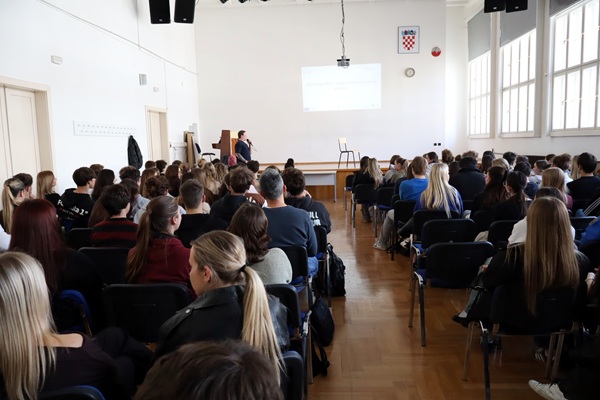
During the session, students from all grade levels explored how DNA fragments found in water, soil, or air can reveal the presence of species without ever seeing them directly. The lecture was delivered by Matej Vucić, bringing advanced scientific concepts closer to young minds through an interactive and engaging format.
DNAture’s mission aligns perfectly with this concept — transforming invisible biological signals into actionable insights for nature protection, food safety, and environmental monitoring.
The event demonstrated how eDNA is no longer just a research tool, but a rapidly growing platform for real-world applications:
Detecting endangered species
Monitoring ecosystems without disturbance
Identifying contamination in food and water
Supporting public safety through biological detection
Inspiring the next generation of scientists
The lecture was part of a national program supporting gifted students in the 2025/2026 academic year, approved by the Ministry of Science and Education and led by dedicated educators combining mathematics, informatics, biology, and chemistry.
For many students, this was their first exposure to the idea that:
“You can detect life without seeing it.”
Through real-world examples and discussions, students gained insight into how technologies like eDNA are reshaping biology, conservation, and even entrepreneurship.
eDNAture: building a public safety platform powered by DNA
eDNAture’s participation in events like this reflects a broader vision — making DNA-based detection accessible beyond laboratories.
As a Public Safety Platform for fast and reliable life-form detection, eDNAture is working toward:
Democratizing biodiversity monitoring
Enabling rapid detection of unwanted biological agents
Providing accessible testing tools and reports for institutions and individuals
By connecting science with education, eDNAture is not only building technology — but also cultivating the next generation of innovators who will use it.
What’s next?
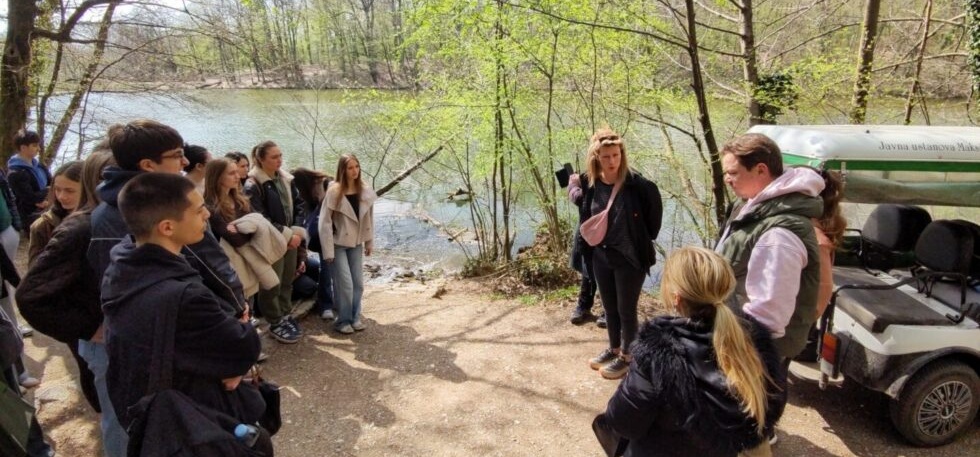
Following the lecture, the school continued activities related to environmental DNA, including fieldwork and applied workshops, reinforcing the practical importance of this emerging technology.
For eDNAture, this is just the beginning.
Because the future of biology isn’t just about what we can see — it’s about what we can detect.